A whiplash is an injury to the neck that is caused by a sudden backward or forward or sideways jerking of the head often due to an accident. It could be a car accident, a brawl in a bar room or a trip or a slip and fall. But what exactly happens when such an injury occurs?
In order for you to understand a few things:
1. The mechanism of injury.
2. The different types of injuries.
3. The treatment options available.
1. The Mechanism of injury:
If for instance, you are a victim of a rear-end crash from a motor vehicle collision, then in such a case, the vehicle on target is struck from the rear by the moving vehicle thrusting it forwards.
Phase 1.
The neck or spine straightens:
At about 75-100 milliseconds, as the driver, you remain stationary while the car is pushed forward. The seat of your car pushes you forward but your neck or head stays behind, creating the S-shaped curve in your spine.
Phase 2.
The neck or spine curves back:
At about 150 milliseconds. Your head continuously extends backward so as to hit a properly positioned headrest or otherwise it further extends backward creating further injury to the spinal structures in the front of the spine. If the head extends to the extreme, injuries to the back of the spine then occur.
Phase 3.
The neck or spine curves back to a maximum:
At about 175 milliseconds, at this phase, the back spine tissues compress whereas front spine tissues stretch fully and act like rubber bands getting ready to spring the head or the neck forwards (phase 4).
Phase 4
Rebound:
At about 200-300 milliseconds, The front neck tissues push the head or the neck forwards and in such a case, an injury can occur to the structures in the back or the front of the spine due to over stretching or compression.
The events occur abruptly as compared to normal muscle contractions, which take averagely 500 milliseconds. So even when you anticipate the impending crash and you brace yourself, it is almost impossible to stop your neck from going through these movements.
2. Types of injuries:
1. Sprain injury.
This is a damage to the tough non-elastic tissue that holds bone to bone commonly known as ligaments or strain to the muscle or elastic tissues that move our bones also known as tendons. A sprain can be mild, moderate or severe. When these tissues are injured there is usually a loss of movement and neck pain but less of arm numbness or pain. But in the case of a nerve injury, there is arm pain, numbness and or weakness which is more serious but usually treatable without the need for surgery. This is a different case when fractures occur since a surgery may be required.
3. Treatment.
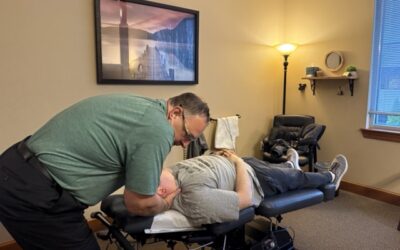
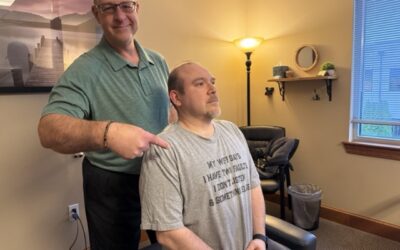
In most cases, whiplash injuries are safely managed by chiropractic methods with the exclusion of fractures. Studies prove that one is better off without wearing a collar as this allows early movements. Thus, early mobilization and manipulation approaches are more likely to yield a better result. Even though there are various treatment methods available, immediate treatment is highly recommended!

Dr. David Warwick, DC, is a board-certified chiropractor with over two decades of experience helping people find fast, effective relief from back and neck pain. He is the only chiropractor in Lacey, WA certified in the Zone Technique — a specialized healing method that restores balance to the body’s six systems for long-term wellness.
At Warwick Chiropractic & Massage, Dr. Warwick focuses on short-term, results-driven care, helping patients return to life without unnecessary long-term treatment plans. His clinic welcomes walk-ins and offers convenient online scheduling for modern, flexible chiropractic care.
Dr. Warwick is committed to educating his patients and the public about natural pain relief, spinal health, and how chiropractic care can be both simple and life-changing.