This article is part of our Back Pain series at Warwick Chiropractic & Massage in Lacey, WA. For the complete overview, see the full guide:
What we mean by full-spine and full-body chiropractic care
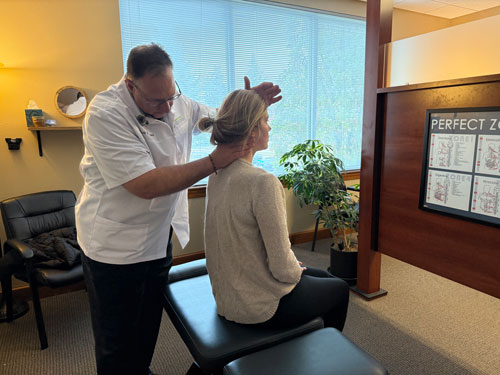
When you come in to see a chiropractor, most people expect spinal adjustments. We do provide spinal adjustments, but we also address the rest of the body—because joints work as a connected system.
In addition to spinal care, we commonly evaluate and treat extremities such as:
- Shoulders
- Elbows and wrists
- Hips
- Knees
- Ankles and feet
Our goal is to improve overall joint motion and mechanics, so you can return to daily activities with less restriction and less irritation.
Understanding traction decompression (and what we provide in-office)
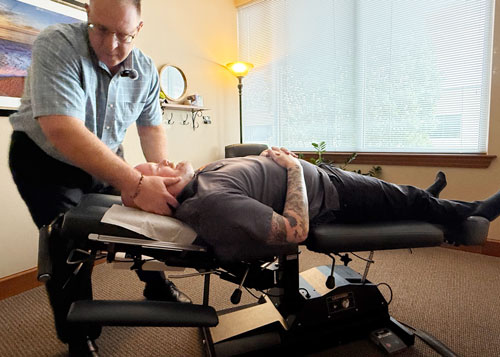
The phrase traction decompression is commonly used to describe traction-based approaches intended to reduce pressure on spinal structures. In our clinic, we provide a form of traction using a Leander Flexion Distraction Table. This table creates a controlled motion that can help gently stretch tissues and reduce stress in the spine.
How flexion-distraction traction may help
Flexion-distraction traction is designed to create a rhythmic, guided movement that can support several goals at once. Depending on your case, it may be used to:
- Stretch the musculature and soft tissue around the spine
- Create a distraction-type motion that can reduce compressive stress
- Support disc hydration by encouraging fluid exchange through gentle motion
- Relieve pressure on irritated nerves when pressure is a contributing factor
- Support alignment and comfort when abnormal curvatures (such as scoliosis) are part of the picture
Important clarification: “decompression therapy” equipment vs. traction-based care
Some offices offer a specific service labeled “spinal decompression therapy,” often involving specialized equipment intended to apply traction in a particular way. We do not offer that dedicated decompression service in our office.
However, we do offer traction-style care through flexion-distraction, and when a different type of decompression approach is indicated, we can refer you out for that procedure.
Advanced modalities we may incorporate into your care
In addition to adjustments and traction-style care, we offer advanced modalities that can be added as options depending on your needs, comfort level, and goals. These tools can be especially helpful when pain, inflammation, or soft tissue tightness is limiting progress.
1) Soft tissue tools: percussion and vibration massage
Soft tissue tension can amplify joint stress and restrict movement. We may incorporate percussion and vibratory massage tools to help address muscle tightness and sensitivity.
These options are commonly used to:
- Reduce protective muscle guarding
- Improve local circulation
- Support range of motion before or after adjustments
- Decrease soreness and improve comfort during care
2) ArthroStim: a gentle instrument adjusting option
We also use an ArthroStim, which is an instrument that delivers a controlled, repeated impulse. This is often a great option for patients who prefer a gentler approach or for areas where an instrument-based method is clinically appropriate.
One of the advantages of the ArthroStim is that we can customize it, including:
- Depth of the impulse
- Frequency (how fast the impulses occur)
- Overall force to match comfort and clinical need
3) Low-level laser (cold laser) therapy
We offer cold laser therapy (also known as low-level laser therapy) as an option to help reduce pain and inflammation at a specific site. It’s a form of light therapy delivered at a particular wavelength.
In simple terms, low-level laser therapy is used with the goal of supporting healthier tissue function. It’s often discussed in relation to cellular energy (ATP) and supporting tissue recovery. In our office, we use it as an optional add-on depending on your condition and care plan.
Cold laser may be considered for a variety of concerns, including both newer pain complaints and longer-term, chronic issues where inflammation and sensitivity are present.
How we decide what to use: our practical, patient-centered process
Not every patient needs every modality. We aim to keep care efficient, focused, and comfortable. Here’s how we typically decide what to incorporate.
- We listen to your goals (pain relief, mobility, returning to work, sports performance, etc.).
- We evaluate movement and joint function to understand where restrictions and irritation may be coming from.
- We choose the right combination of adjustments and supportive options, which may include traction-style care, soft tissue work, ArthroStim, and/or cold laser therapy.
- We reassess regularly and adjust the plan based on your response.
Who may benefit from traction-style care and advanced modalities?
In our experience, traction-based approaches and supportive therapies can be useful when stiffness, nerve pressure, or soft tissue tension is a major driver of symptoms. While every case is different, we commonly consider these options when patients report:
- Back or neck discomfort with limited range of motion
- Symptoms that worsen with compression or prolonged sitting/standing
- Tight, guarded muscles that make adjustments harder to tolerate
- Chronic pain patterns where inflammation and sensitivity are persistent
- Postural or curvature-related stress (including scoliosis-related discomfort)
If you’re unsure what applies to you, that’s normal—our job is to evaluate and guide you toward the safest, most effective options.
Key Takeaways
- We provide full-spine and extremity (full-body) adjustments to support overall joint function.
- Traction decompression is often used as a broad term; in our office we provide traction-style care through a Leander Flexion Distraction Table.
- Flexion-distraction traction can help stretch soft tissues, reduce pressure on irritated structures, and support disc and joint comfort.
- We offer advanced modalities such as percussion/vibration soft tissue tools, ArthroStim instrument adjusting, and low-level (cold) laser therapy.
- We don’t offer dedicated “spinal decompression therapy” equipment in-office, but we can refer out when appropriate.
Where to Go From Here
If you’re dealing with back, neck, or joint discomfort and you want help today, we invite you to walk in for same day relief. We’ll take time to understand what’s driving your symptoms and whether traction-style care, adjustments, or one of our advanced modalities is the best fit. Visit us at Warwick Chiropractic & Massage in the Lacey/Olympia area and let’s start getting you back to moving comfortably.
Frequently Asked Questions
What is traction decompression in chiropractic care?
Traction decompression generally refers to traction-based methods used to reduce pressure and improve motion in spinal tissues. In our office, we provide traction-style care through flexion-distraction on a Leander Flexion Distraction Table to gently stretch soft tissues and support comfort.
Do you offer spinal decompression therapy machines?
We do not offer a dedicated spinal decompression therapy machine in our office. We do offer traction-style flexion-distraction care, and we can refer patients out for other decompression procedures when appropriate.
What are advanced modalities in your clinic?
Advanced modalities are supportive treatment options we may add to adjustments, such as percussion or vibratory soft tissue tools, ArthroStim instrument adjusting, and low-level (cold) laser therapy to help with pain, inflammation, and tissue sensitivity.
What is the Leander Flexion Distraction Table used for?
It’s used to provide a controlled flexion-distraction traction motion that can help stretch muscles and soft tissues, reduce stress around joints and discs, and relieve pressure that may be affecting nerves.
Is ArthroStim a gentler way to adjust?
Yes. ArthroStim is an instrument adjusting option that can be set to different depths and frequencies. We can tailor how light or firm it feels based on what’s clinically appropriate and what you’re comfortable with.
What does cold laser therapy do?
Cold laser (low-level laser) therapy is a form of light therapy used as an option to help reduce pain and inflammation at a specific site. It’s often discussed in relation to supporting cellular energy (ATP) and healthier tissue function.
Ready to feel better? Walk in today or book online – most new patients are seen within 24 hours.
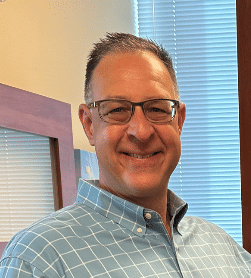
Dr. David Warwick, DC, is a board-certified chiropractor with over two decades of experience helping people find fast, effective relief from back and neck pain. He is the only chiropractor in Lacey, WA certified in the Zone Technique — a specialized healing method that restores balance to the body’s six systems for long-term wellness.
At Warwick Chiropractic & Massage, Dr. Warwick focuses on short-term, results-driven care, helping patients return to life without unnecessary long-term treatment plans. His clinic welcomes walk-ins and offers convenient online scheduling for modern, flexible chiropractic care.
Dr. Warwick is committed to educating his patients and the public about natural pain relief, spinal health, and how chiropractic care can be both simple and life-changing.
Further Reading: Back Pain
- How Much Does a Chiropractic Visit Typically Cost?
- Do Patients Need Long-Term Chiropractic Care?
- Short-Term Chiropractic Care & The Warwick Way
- Chiropractic and Massage Better Together?
- Walk-In vs Scheduled Appointment What’s the Difference?
→ Complete Guide: Back Pain Treatment in Lacey, WA — The Complete Guide