This article is part of our Back Pain series at Warwick Chiropractic & Massage in Lacey, WA. For the complete overview, see the full guide:
Is Cracking Your. Own Back or Neck a Good Idea?
Cracking your own back or neck can give short-term relief, but it often doesn’t address the joint that’s truly restricted—and in some cases it can irritate ligaments and tendons over time. Most people end up “popping the easy spots,” while the problem area stays stuck. A targeted chiropractic adjustment aims to restore motion to the specific restricted joint, not just create a pop.
This article is part of our series on the Warwick Way – our approach to short-term, results-driven chiropractic care in Lacey WA. To learn more about what makes us different, visit our main Warwick Way resource page and continue reading.
Why cracking feels good (even when it’s not fixing the problem)
We hear it all the time: you crack, you feel a release, and you think, “That worked.” The truth is, the sensation of relief doesn’t always mean the underlying cause changed.
When you’re cracking your own back or cracking your own neck, you’re usually moving the segments that already have some mobility. That can temporarily reduce stiffness and create a “looser” feeling.
- Short-term pressure change: The pop is often related to joint pressure changes.
- Temporary reduction in tension: Surrounding muscles may relax for a bit.
- Neurologic “reset” feeling: Your nervous system can interpret the change as relief.
But if the truly restricted joint isn’t the one being addressed, the relief is often brief—and the urge to crack returns.
What’s actually causing the “need to crack” in the first place?
In our clinic, we commonly find that the joints people want to crack feel irritated and restricted because they’re under extra stress. Based on what we see every day at Warwick Chiropractic & Massage, the most common drivers are surprisingly consistent.
Common causes of irritation and restriction
- Poor posture: Especially forward head posture that loads the neck joints.
- Tech neck / desk posture: Hours of texting, studying, gaming, or computer work changes head and shoulder position.
- Old or new injuries: Auto accidents, sports strains, work injuries, and “slept wrong” moments can all set the stage.
- Compensation patterns: When one segment doesn’t move well, nearby segments move more to make up for it.
That compensation piece matters. If one joint is stuck, other joints above and below often become hypermobile. Those are the ones most people can pop repeatedly—because they’re already doing extra work.
The hidden problem with cracking yourself: you usually pop the wrong segment
Here’s the simplest way we explain it: when you’re cracking your own back, you don’t have an objective way to identify which joint is actually restricted. Your body naturally chooses the path of least resistance.
So what happens?
- You repeatedly move the easiest, most mobile areas.
- The truly restricted joint stays restricted.
- The surrounding tissues take more strain to “get the pop.”
This is one reason people develop a habit—because the core issue isn’t being corrected, and the temporary relief trains the behavior.
Can cracking your own back or neck cause damage?
We want to be fair and accurate here: not every single crack is a disaster. But the honest answer from a clinical standpoint is: it can cause problems, especially when it becomes frequent or forceful.
Potential risks we see with frequent self-cracking
- Microtrauma: Repeated strain can create tiny injuries to ligaments and tendons.
- Increased joint irritation: The area can feel more “needy” and tight over time.
- Hypermobile segments get looser: The joints you keep popping may become more unstable compared to the restricted area.
- Faster wear-and-tear: Over time, repeated stress can contribute to degenerative changes (arthritis).
And with cracking your own neck specifically, force and direction matter. The neck protects important nerves and blood vessels, and the goal should never be aggressive twisting to “make it pop.” If you’re needing to crack frequently, that’s a sign to assess the cause rather than chase the sound.
Why a chiropractor’s adjustment is different than self-cracking
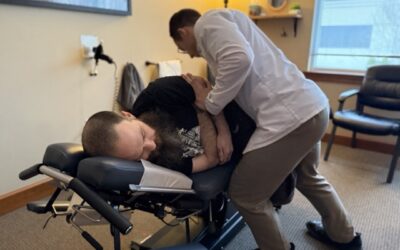
A professional adjustment isn’t just “popping.” In chiropractic care, we’re trying to locate the specific joint that isn’t moving correctly, then use the right leverage, technique, and force to restore normal motion.
When we evaluate someone who’s been cracking your own back for months (or years), we often find a pattern:
- One or more segments are restricted (not moving enough).
- Nearby segments are overmoving (moving too much).
- Muscles are guarding because the body doesn’t feel stable.
When the restricted segments get addressed appropriately, many people tell us the same thing: “I’m not feeling the urge to crack myself as much anymore.” That’s a strong clue we’re getting closer to the real problem.
When self-cracking is a sign you should be evaluated
Sometimes a single crack happens accidentally when you stretch—no big deal. But if you’re relying on it to get through the day, it’s worth a closer look.
Consider getting checked if any of the following are true:
- You’re cracking your own back or neck multiple times a day.
- The relief lasts minutes (or you feel worse afterward).
- You have pain that’s been lingering for more than 1–2 weeks.
- You have headaches with neck stiffness (common with cervicogenic or tension headaches).
- You’ve had a recent car accident/whiplash, work injury, or sports strain.
- You notice tingling, numbness, or pain traveling into an arm or leg.
At our Lacey clinic, walk-in and same-day visits are built for these “I need help now” situations—whether it’s a stiff neck, low back pain, sciatica symptoms, or a weekend strain.
Safer alternatives to cracking yourself (that actually help)
If your body is asking for movement, we’d rather you use low-risk strategies that support posture and mobility—without repeatedly yanking on joints.
Try these first
- Posture reset breaks: Every 30–60 minutes, stand up, retract your shoulders gently, and bring your head back over your ribs.
- Gentle mobility (not forceful twisting): Slow neck rotations within a comfortable range, thoracic (upper back) extension over a chair back, and hip flexor opening.
- Hydration + short walks: Simple, but often reduces the “stuck” feeling in the spine.
- Targeted stretching: If posture is the driver, consistent stretching often beats aggressive popping.
We also share exercise and stretching resources online. If you want guided options, you can find helpful content on our site at drdavidwarwick.com and our Warwick Chiropractic YouTube channel mentioned in our educational materials.
What to do next: a simple 3-step plan
- Notice the pattern: When do you feel the urge—after computer time, driving, stress, or workouts?
- Reduce the “chasing the pop” behavior: Swap forceful cracking with gentle movement and posture breaks for a week.
- Get the restriction assessed if it persists: If pain, stiffness, headaches, or repeated cracking continues, let’s identify the exact segments involved.
If you’re local to Lacey/Olympia and you want fast help, Warwick Chiropractic & Massage is set up for walk-in care—most patients are seen immediately or within about 5–10 minutes, and we have three doctors on staff to keep things moving.
Key Takeaways
- Cracking your own back can feel good, but it often targets the easiest joints—not the restricted ones.
- Frequent self-cracking may create microtrauma to ligaments and tendons and can contribute to irritation over time.
- Restricted joints can force nearby segments to overmove, which is often what you keep “popping.”
- Posture (especially tech neck), injury, and desk habits are common root causes.
- A chiropractic adjustment is designed to restore motion to the specific restricted joint using appropriate leverage and force.
- If you’re constantly cracking your own back or cracking your own neck for relief, it’s a strong signal to get evaluated.
Where to Go From Here
If you’re stuck in the cycle of cracking your own back for temporary relief, we can help you pinpoint what’s restricted and what’s compensating—so you’re not just chasing pops. At Warwick Chiropractic & Massage in Lacey (8650 Martin Way E Ste 207), walk ins welcome, and most people are seen right away or within about 5–10 minutes. Come in during our open hours or call 360-951-4504, and we’ll help you take the next best step.
Frequently Asked Questions
Why does cracking my back feel like it relieves pressure?
It can briefly change joint pressure and relax surrounding muscles, which your nervous system interprets as relief. But it often doesn’t fix the truly restricted joint that’s driving the stiffness.
Is cracking your own neck dangerous?
It can be risky when it’s frequent, forceful, or done with twisting. The neck is sensitive, and repeated self-cracking may irritate tissues or encourage hypermobility in the wrong segments.
Can cracking your own back cause arthritis?
Frequent, forceful self-cracking can contribute to microtrauma and joint irritation over time. Those stresses may speed up degenerative wear-and-tear in some people.
Why do I keep needing to crack the same spot?
Often the segment you crack is the one that moves easily (sometimes too easily), while a nearby joint remains restricted. The body then keeps seeking the same release without resolving the root cause.
What should I do instead of cracking my back or neck?
Try posture breaks, gentle mobility (not aggressive twisting), short walks, hydration, and targeted stretching. If the urge to crack and the pain keep returning, a professional assessment can identify the exact restriction.
When should I see a chiropractor for back or neck cracking?
If you’re cracking multiple times per day, the relief is short-lived, symptoms last more than 1–2 weeks, or you have headaches, radiating pain, numbness, or tingling, it’s time to be evaluated.

Dr. David Warwick, DC, is a board-certified chiropractor with over two decades of experience helping people find fast, effective relief from back and neck pain. He is the only chiropractor in Lacey, WA certified in the Zone Technique — a specialized healing method that restores balance to the body’s six systems for long-term wellness.
At Warwick Chiropractic & Massage, Dr. Warwick focuses on short-term, results-driven care, helping patients return to life without unnecessary long-term treatment plans. His clinic welcomes walk-ins and offers convenient online scheduling for modern, flexible chiropractic care.
Dr. Warwick is committed to educating his patients and the public about natural pain relief, spinal health, and how chiropractic care can be both simple and life-changing.