How Long Recovery Takes After a Car Accident
One of the most common questions we hear at Warwick Chiropractic and Massage is: How Long Recovery Takes After a Car Accident? It’s a crucial question because expectations shape decisions—when to start care, how consistent to be, and whether to “wait it out.” The honest answer is that timelines vary widely, but there are clear patterns we can use to estimate what’s normal, what’s not, and what you can do to support a smoother recovery.
If you’re searching for guidance after a car accident Lacey drivers experience every day—rear-end impacts, low-speed fender benders, or more serious collisions—our goal is to help you understand what affects healing and why the right plan matters.
Why “How Long” Isn’t a Simple Answer
When people ask How Long Recovery Takes After a Car Accident, they’re usually hoping for a single number of days or weeks. In reality, recovery depends on multiple factors that interact with each other. Even when two people experience the “same type” of crash, their bodies and injury histories can make their healing paths very different.
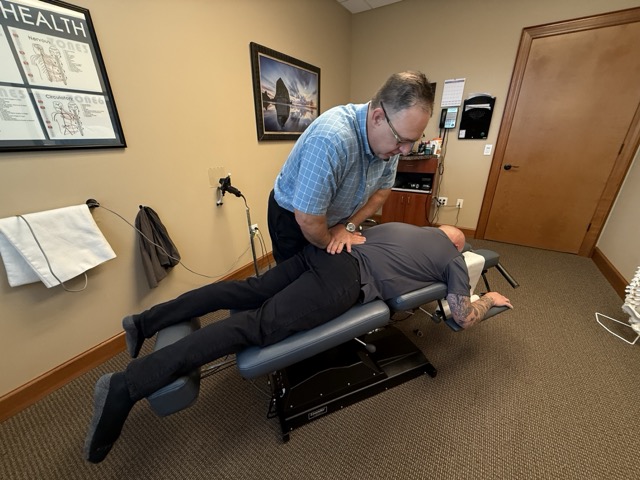
Chiropractic care for car accident injury.
The 5 Biggest Factors That Influence Recovery Time
In our experience, these five variables drive most of the timeline differences when people ask How Long Recovery Takes After a Car Accident:
- Severity of the collision (speed, direction of impact, vehicle damage, restraint use)
- Type of injury (sprain/strain, whiplash-associated disorder, joint irritation, nerve involvement, headache patterns)
- How quickly care begins after the accident
- Prior injury history (previous neck/back injuries, old sports injuries, past auto accidents)
- Consistency with treatment and home recommendations (frequency, follow-through, activity modifications)
Low-Speed Collisions Can Still Cause Significant Symptoms
A common misconception is that recovery should be fast if the crash “felt minor.” But even low-speed impacts—sometimes under a few miles per hour—can create a rapid acceleration/deceleration effect. That force can stress the neck and spine and contribute to a whiplash-type mechanism, especially if you weren’t braced for impact.
This is one reason How Long Recovery Takes After a Car Accident can be longer than expected: the body can be injured even when the car looks fine.
Typical Recovery Timelines (A Very General Guideline)
We want to be clear: every patient is unique. Still, when people ask How Long Recovery Takes After a Car Accident, these broad ranges help set realistic expectations:
- Minor soft tissue injuries: may improve within a few weeks
- Moderate injuries: often require several months of structured care and progressive rehabilitation
- More complex cases: can take longer, and may require staged treatment (different phases supported by different providers)
“Staged treatment” simply means your needs can evolve. Early care may focus on calming pain and restoring motion, while later phases focus on rebuilding stability, strength, and movement patterns so you’re not stuck in a cycle of flare-ups.
Healing Happens in Stages (Not in a Straight Line)
Another key to understanding How Long Recovery Takes After a Car Accident is knowing how the body heals. Recovery is usually a staged process. You can feel better for a week and then feel worse for a few days—especially when you start moving more, return to work, or increase activity. That doesn’t automatically mean you’re “back to square one.”
Stage 1: Inflammatory Phase
This is the body’s immediate response after tissue stress or injury. Blood flow and inflammatory chemicals increase to begin repair.
- Common experiences: pain, stiffness, guarding, reduced mobility
- Typical needs: calming irritation, protecting the area, gentle movement when appropriate
Stage 2: Repair Phase
This is when damaged tissues begin rebuilding. Appropriate movement matters here—too little can lead to stiffness and weakness, while too much too soon can flare symptoms.
- Common experiences: less intense pain but lingering tightness, fatigue, or sensitivity
- Typical needs: guided care, progressive mobility work, and supervised activity upgrades
Stage 3: Strengthening (Remodeling) Phase
This is where long-term results are often won or lost. The goal isn’t just to feel “okay,” but to rebuild strength, stability, coordination, and normal movement patterns.
- Common experiences: symptoms appear mostly with activity or at the end of the day
- Typical needs: progressive strengthening, stability work, and return-to-activity planning
When people stop care as soon as they feel a little better, they may never fully complete the strengthening phase. That’s a common reason symptoms return later—especially when life gets busy, stress increases, or physical demands go up.
Why Recovery Sometimes Feels Slow
If you’ve wondered whether your progress is “too slow,” you’re not alone. Soft tissue healing takes time and tends to be incremental. Many patients notice:
- Progress comes in waves (good days and bad days)
- Symptoms shift locations (for example, neck pain improves but headaches show up, or vice versa)
- Work posture, sleep position, and stress can amplify pain signals
This is exactly why answering How Long Recovery Takes After a Car Accident requires both patience and a plan. The plan helps you measure progress by function (range of motion, tolerance, strength), not just by pain level on one particular day.
Does Starting Care Right Away Help?
Yes—early attention typically helps shorten recovery time and reduce complications. When we address injuries sooner, we can often:
- Identify movement restrictions and protective patterns before they become “new normal”
- Support safer activity, so you don’t unknowingly aggravate healing tissue
- Build consistency early, which supports better long-term outcomes
In other words, one of the best ways to influence How Long Recovery Takes After a Car Accident is to start appropriate care promptly rather than waiting for symptoms to “prove” they’re serious.
Can Stopping Care Early Cause Problems Later?
It can. We see it happen when patients feel improved and decide to stop before the body is fully reconditioned. The risk is that pain decreases before strength and stability return. That gap can lead to:
- Recurring neck or back pain
- Headaches that return during stress or long computer days
- Reduced tolerance for lifting, driving, or exercise
- Re-injury during normal activities
So when patients ask How Long Recovery Takes After a Car Accident, we emphasize that recovery is not only about feeling better—it’s about restoring function and preventing long-term issues.
What You Can Do This Week to Support Recovery
While each case is different, these steps often help people recover more smoothly after an accident.
- Pay attention to patterns: note what activities worsen symptoms (driving, screens, lifting, sleeping positions).
- Stay gently active (as tolerated): complete rest can increase stiffness; guided movement is often beneficial.
- Be consistent: recovery responds to repeated, appropriate inputs over time.
- Don’t chase pain: focus on function—mobility, endurance, and stability improvements matter.
- Get your case evaluated: an individualized plan is the most reliable way to estimate timelines.
Key Takeaways
- How Long Recovery Takes After a Car Accident varies based on collision severity, injury type, prior history, how fast care begins, and consistency.
- Even low-speed collisions can produce significant forces on the neck and spine and lead to whiplash-type symptoms.
- Healing typically occurs in stages: inflammatory, repair, then strengthening—progress is rarely a straight line.
- Stopping care too early can contribute to recurring pain because the strengthening phase may not be completed.
- Early care often shortens recovery time and supports better long-term function.
Common Questions We Hear After an Auto Accident
How long is “normal” to feel sore after a crash?
It’s common to feel sore for days to weeks depending on the injury. Some symptoms also intensify 24–72 hours after a collision. If pain persists, spreads, or limits daily activities, it’s wise to be evaluated.
Why do I feel better, then worse again?
This often reflects staged healing and changing activity levels. As you return to normal routines, the body may reveal weaknesses or movement limitations that weren’t obvious when you were resting more.
Is it possible the crash was “too minor” to cause injury?
Not necessarily. Vehicle damage does not always correlate with the forces transmitted to the body. Even seemingly minor incidents can trigger neck and back symptoms.
What if I had prior neck or back issues?
Previous injuries can affect how tissues tolerate impact and how quickly you regain function. That doesn’t mean you can’t improve—it means your plan may need to be more specific and consistent.
Where to Go From Here
If you’re still wondering How Long Recovery Takes After a Car Accident, we can help you turn uncertainty into a clearer plan. At Warwick Chiropractic and Massage, we routinely guide patients through each stage of recovery—so the goal isn’t just short-term relief, but lasting function and fewer setbacks.
If you’re dealing with pain, stiffness, or limited movement after a collision, we can help you understand your next best steps and what your recovery may realistically look like. Walk in for relief today so we can evaluate your symptoms, guide your care plan, and help you move forward with confidence. The sooner we start, the easier it is to support proper healing and reduce the risk of lingering problems.
Frequently Asked Questions
How Long Recovery Takes After a Car Accident if the crash was low speed?
Even low-speed collisions can create a whiplash-type force on the neck and spine. Some people recover in a few weeks, while others need months depending on injury type, prior history, and how quickly care begins.
Why does recovery sometimes feel slow after a car accident?
Soft tissue healing takes time and occurs in stages—early inflammation, then repair, then strengthening. Progress often comes in waves rather than a straight line.
Does starting care right away reduce how long recovery takes after a car accident?
Yes. Early evaluation and guided care often shortens recovery by addressing mobility restrictions, supporting appropriate activity, and preventing compensations that can prolong symptoms.
Can stopping treatment early cause recurring pain later?
It can. Many people feel better before the strengthening phase is complete. Without rebuilding stability and normal movement patterns, symptoms may return with work, stress, driving, or exercise.
What factors most affect how long recovery takes after a car accident?
Key factors include collision severity, injury type, how quickly care starts, prior injury history, and consistency with treatment and home recommendations.

Dr. David Warwick, DC, is a board-certified chiropractor with over two decades of experience helping people find fast, effective relief from back and neck pain. He is the only chiropractor in Lacey, WA certified in the Zone Technique — a specialized healing method that restores balance to the body’s six systems for long-term wellness.
At Warwick Chiropractic & Massage, Dr. Warwick focuses on short-term, results-driven care, helping patients return to life without unnecessary long-term treatment plans. His clinic welcomes walk-ins and offers convenient online scheduling for modern, flexible chiropractic care.
Dr. Warwick is committed to educating his patients and the public about natural pain relief, spinal health, and how chiropractic care can be both simple and life-changing.