
This article is part of our Back Pain series at Warwick Chiropractic & Massage. For the complete overview, see the full guide:
The pelvic floor and core work together as one “team,” with the pelvic floor forming the base of your core canister. When you reconnect that base with your breath and movement, it can change how your low back, pelvis, and hips share the workload. Below, we’ll walk you through two gentle exercises we use to help people start feeling that connection again.
In this article
- How are the pelvic floor and core connected?
- What is the pelvic floor?
- What are common signs of pelvic floor problems, including leaking when sneezing?
- Who can have pelvic floor problems?
- Are pelvic floor exercises always about doing Kegels?
- Exercise 1: How do I do the sound check?
- Exercise 2: How do I do the child’s pose press?
- What safety notes should I follow with these exercises?
- How can Warwick Chiropractic & Massage help?
- When should I get help right away?
- Key Takeaways
- Next Steps
- Frequently Asked Questions
How are the pelvic floor and core connected?
The pelvic floor and core are connected because they’re parts of the same canister-like system that manages pressure, movement, and support. The pelvic floor isn’t separate from your abs or your breathing—it works with them.
We like the “core canister” picture because it’s easy to feel:
- The lid: your diaphragm (the main muscle you breathe with)
- The front and sides: deep abdominal muscles that wrap around you
- The back: muscles along your spine
- The base: your pelvic floor
When you breathe in, your diaphragm drops and your belly, sides, and pelvic floor gently expand. When you breathe out, they recoil. And when you lift, cough, or jump, the whole canister tightens to support your spine.
When one part of the team isn’t doing its share, other parts tend to pick up the slack. That’s a big reason we look at how your low back, pelvis, and hips move together—not just at the one spot that hurts.
What is the pelvic floor?
The pelvic floor is a group of muscles that stretches like a hammock from your pubic bone at the front to your tailbone at the back, and between your two sit bones. It supports your bladder and bowel, helps you control when you go, and plays a part in sexual function.
It also has a job most people never hear about: it’s the bottom of your core.
What are common signs of pelvic floor problems, including leaking when sneezing?
Common signs of pelvic floor problems include leaking when you cough, sneeze, laugh, or exercise; a sudden urge that’s hard to hold; a feeling of heaviness or pressure in the pelvis; or pain in the pelvis, hips, or low back. These issues are common, but common isn’t the same as something you have to put up with.
One reason people stay quiet about it is embarrassment—even though it’s very common. In the 2018 University of Michigan National Poll on Healthy Aging, nearly half of women aged 50 to 80 said they’d had urine leakage in the past year, and about two-thirds of them hadn’t talked to a doctor about it.
Who can have pelvic floor problems?
Anyone can have pelvic floor problems, men included. There isn’t one “type” of person this affects.
Common contributors we see include:
- Pregnancy and childbirth
- Menopause and the hormone changes that come with it
- Heavy lifting, high-impact exercise, or a long-term cough
- Prostate surgery in men
- Holding tension for long periods, including stress and shallow breathing
Are pelvic floor exercises always about doing Kegels?
No—pelvic floor exercises aren’t always about squeezing harder or doing more Kegels. A pelvic floor can be weak, but it can also be too tight, or simply not well coordinated with the rest of your core.
Often, the first step is learning to feel these muscles and let them work with your breath. That’s exactly what the two exercises below are for: rebuilding the connection between your brain and the pelvic floor and core system.
Exercise 1: How do I do the sound check?
The sound check uses your voice to help you feel your core switch on, because your diaphragm, abdominal muscles, and pelvic floor all help shape sound. You’re not trying to force anything—you’re exploring and noticing.
- Sit tall. Place your hands on your sides, on your belly, or on your low back.
- Hum for a few seconds. Notice what you feel under your hands.
- Try other sounds: a breathy “hhh,” a “k” sound, an “nnn,” an open “ahh.” Each one asks your core to work a little differently.
- To feel your pelvic floor, sit on your hands with your fingertips under your sit bones and repeat the sounds. If that’s awkward, rest one hand just in front of or behind your pelvis instead.
Spend a minute or two exploring. Again, we’re not trying to force anything—just notice.
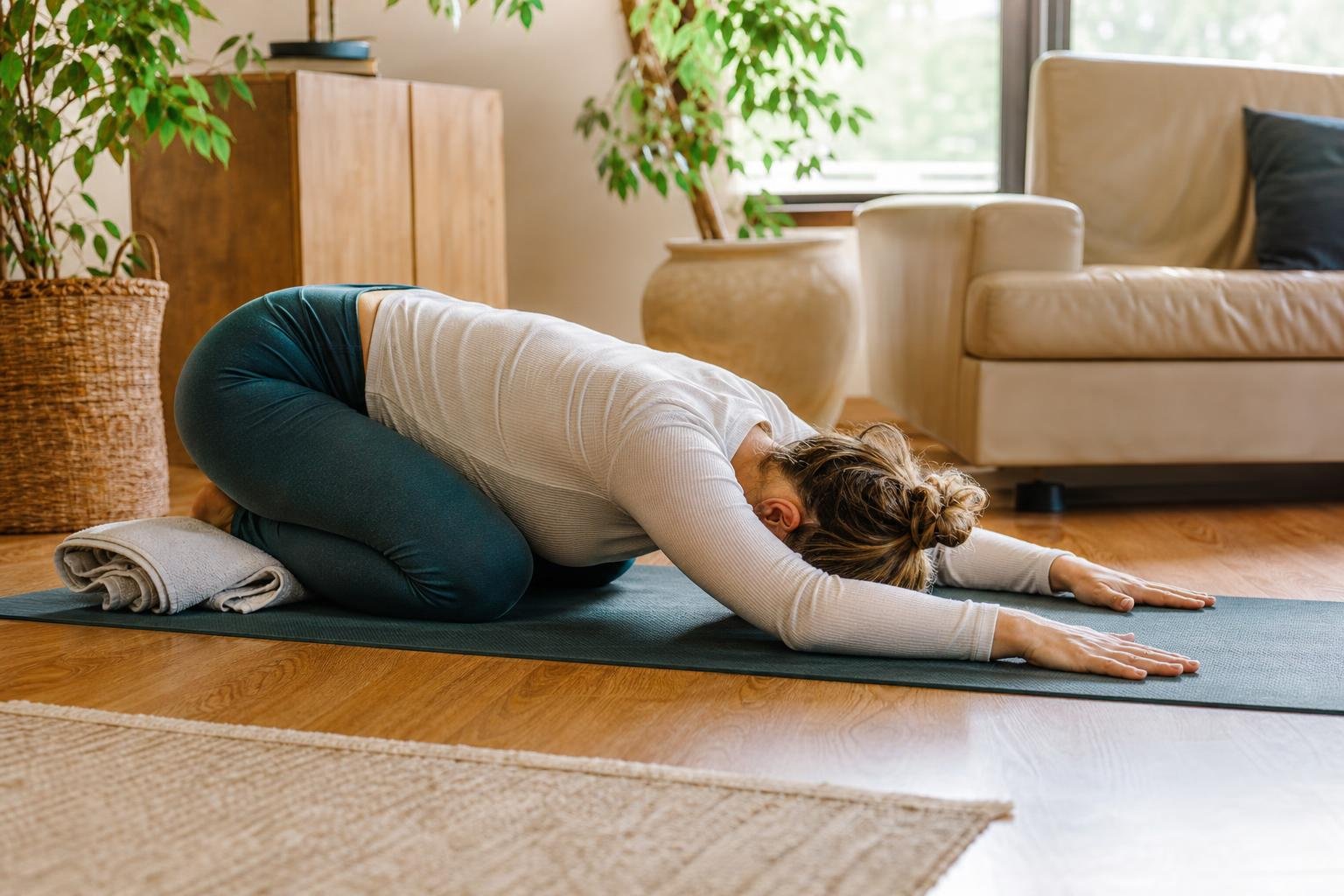
Exercise 2: How do I do the child’s pose press?
The child’s pose press helps you feel your pelvic floor working from a lengthened position, which is close to the opposite of a Kegel. It’s not a strength workout—it’s about building the connection.
- Kneel, sit back toward your heels with your knees a little wider than your hips, and fold forward with your arms out in front. If your ankles or knees complain, roll a towel under your ankles or let your hips stay higher. That’s fine.
- Take a few slow breaths. On each inhale, feel the area between your sit bones gently expand as your belly presses into your thighs. On each exhale, let it relax. No squeezing.
- Press your hands gently into the floor as if you’re about to slide forward, lifting yourself just an inch or two.
- Notice the gentle activity in your pelvic floor, then rest back down. Repeat a few times.
Got a partner? They can rest a forearm across your sacrum (the flat bone at the base of your spine) and push gently back toward your heels while you press forward. You won’t move much. The resistance just helps you feel the area.
What safety notes should I follow with these exercises?
Stop if anything hurts. If you’re pregnant or have recently given birth, check with your OB or midwife before starting new exercises.
How can Warwick Chiropractic & Massage help?
At Warwick Chiropractic & Massage, we look at how your low back, pelvis, and hips are moving and working together, because that movement relationship matters for how the pelvic floor and core share load. We use adjustments and soft-tissue work where they’ll help, and we can show you simple home exercises like these so you keep making progress between visits.
Everything we do is external and done fully clothed. Some pelvic floor problems are best handled by a pelvic floor physical therapist or your medical provider, and if that’s the case for you, we’ll tell you.
If you’re looking for walk-in access with a local team in Lacey, you can also learn more about our walk-in chiropractic care or pair your visit with massage therapy.
When should I get help right away?
Go to the emergency room if back pain comes with new numbness or tingling between your inner thighs, around your genitals or buttocks; new trouble starting or controlling urination; or loss of bowel control. These can be signs of cauda equina syndrome, a rare but serious nerve compression that needs urgent care.
See your medical provider if you notice blood in your urine, pain when you urinate, or pelvic pain that doesn’t go away.
Key Takeaways
- The pelvic floor is the base of your core canister and works with breathing and deep abdominal and spinal muscles.
- Leaking with coughing, sneezing, laughing, or exercise is common, but it isn’t something you simply have to accept.
- A pelvic floor can be weak, too tight, or out of sync with the rest of the core—so “more squeezing” isn’t always the answer.
- The sound check uses humming and simple sounds to help you notice how your diaphragm, abs, and pelvic floor respond together.
- The child’s pose press helps you sense gentle pelvic floor activity from a lengthened position—no squeezing required.
- Stop if anything hurts, and check with your OB or midwife if you’re pregnant or recently postpartum before starting new exercises.
Next Steps
If your back, hips, or midsection hasn’t felt right, we can help you sort out what’s happening with your pelvic floor and core and how it fits into the way your body is moving. You can find us at Warwick Chiropractic & Massage at 8650 Martin Way E Ste 207 in Lacey, WA 98516, and if you want to speak with our team you can call 360-951-4504.
Walk ins welcome or schedule an appointment today.
We’ll take a look at how your low back, pelvis, and hips are working together, and we’ll make sure you leave with simple next steps you can practice at home.
Frequently Asked Questions
Do men have a pelvic floor?
Yes, everyone has a pelvic floor. Men can have pelvic floor problems too, especially after prostate surgery. The same “core canister” idea still applies: breathing, deep abdominal support, the back muscles, and the pelvic floor work together, and coordination matters.
Is leaking just part of getting older or having kids?
Leaking is common, but you don’t have to accept it as inevitable. Pelvic floor muscle training is one of the first non-surgical steps usually recommended for leaks with coughing, sneezing, or exercise. Ask your medical provider what’s right for you.
What is the pelvic floor, in plain language?
The pelvic floor is a group of muscles that stretches like a hammock from the pubic bone to the tailbone and between the sit bones. It supports the bladder and bowel, helps control when you go, and plays a part in sexual function.
Why isn’t it always about doing Kegels?
It’s not all about Kegels because a pelvic floor can be weak, but it can also be too tight or not well coordinated with the rest of the core. Squeezing harder isn’t always the answer. Often the first step is learning to feel the muscles with your breath.
What are the “sound check” and “child’s pose press” meant to do?
The sound check and the child’s pose press are meant to build the connection between your brain and the pelvic floor muscles. They help you notice pelvic floor activity without forcing it, using breath, gentle pressure, and simple movements rather than turning it into a strength workout.
When should someone seek urgent medical help for back pain and bladder or bowel changes?
Go to the emergency room if back pain comes with new numbness or tingling between the inner thighs, around the genitals or buttocks; new trouble starting or controlling urination; or loss of bowel control. These can be signs of cauda equina syndrome needing urgent care.
Ready to feel better?

Dr. David Warwick, DC, is a board-certified chiropractor with over 30 years of experience helping people find fast, effective relief from back and neck pain. He is the only chiropractor in Lacey, WA certified in the Zone Technique — a specialized healing method that restores balance to the body’s six systems for long-term wellness.
At Warwick Chiropractic & Massage, Dr. Warwick focuses on short-term, results-driven care, helping patients return to life without unnecessary long-term treatment plans. His clinic welcomes walk-ins and offers convenient online scheduling for modern, flexible chiropractic care.
Dr. Warwick is committed to educating his patients and the public about natural pain relief, spinal health, and how chiropractic care can be both simple and life-changing.
Further reading: Back Pain
- Pulled Your Back Working Out or Lifting? Quick Relief for Acute Low Back Spasms in Lacey
- Back or Neck Pain: When to See a Chiropractor and When to Go to Urgent Care or the ER
- Do You do Spinal Decompression for a Disc Problem?
- Short-Term Chiropractic Care & The Warwick Way
- Chiropractic and Massage Better Together?